
History of Colorado – Complete Journey from Prehistoric Times to Statehood (Part 1)
Introduction
Colorado is one of the most historically fascinating regions in North America. Known today for its majestic Rocky Mountains, thriving cities, outdoor recreation, and rich cultural heritage, Colorado’s story stretches back thousands of years before the arrival of European explorers.
The history of Colorado is a remarkable journey of ancient civilizations, Indigenous cultures, Spanish exploration, American expansion, mining booms, railroad development, and statehood. From the first Paleo-Indians who hunted mammoths on the Great Plains to the miners who transformed the Rocky Mountains during the Gold Rush, Colorado has continually evolved into one of the most influential states in the American West.
This comprehensive article explores the complete history of Colorado, beginning with its earliest inhabitants and continuing through the rise of Native American civilizations and European exploration. The historical details are based on the information contained in the provided source material.
Geography and Historical Importance of Colorado
Colorado occupies a unique position in the American West. The state contains towering mountain ranges, high deserts, fertile river valleys, and vast plains.
Its strategic location made it:
- A migration route for prehistoric peoples
- A center of Native American culture
- An important region for Spanish exploration
- A major destination during the American Gold Rush
- A transportation hub linking eastern and western America
The Rocky Mountains played a defining role in shaping Colorado’s history, influencing settlement patterns, trade routes, agriculture, and mining development.
The First People of Colorado
Colorado During the Ice Age
More than 13,000 years ago, Colorado looked dramatically different from today.
Large glaciers covered portions of North America. The climate was colder, and the landscape supported giant Ice Age animals, including:
- Woolly mammoths
- Giant ground sloths
- Ancient bison
- Other megafauna
The earliest known inhabitants of Colorado lived during this prehistoric period and survived by hunting these large animals.
The Paleo-Indian Era
The first people in Colorado are known as Paleo-Indians.
These early inhabitants migrated into North America from Asia through the Bering Land Bridge and gradually spread throughout the continent.
They became highly skilled hunters and developed sophisticated stone tools.
Clovis Points
Among the most important archaeological discoveries associated with Paleo-Indians are Clovis points.
These spear points were:
- Carefully crafted from stone
- Extremely sharp
- Designed for hunting large animals
- Attached securely to wooden shafts
The creation of Clovis points required advanced craftsmanship and knowledge of stoneworking techniques. Archaeological evidence demonstrates that these early peoples possessed remarkable survival skills and technological abilities.
The Lindenmeier Site
One of Colorado’s most significant archaeological locations is the Lindenmeier Site in northern Colorado.
Discovered during the twentieth century, this site has produced thousands of artifacts, including:
- Stone tools
- Bone implements
- Hunting equipment
- Food remains
The discoveries reveal that Colorado’s earliest inhabitants were not merely surviving; they were thriving.
Evidence suggests they:
- Understood seasonal migrations
- Utilized local resources effectively
- Created decorative objects
- Maintained sophisticated social systems
The site remains one of the most important Paleo-Indian archaeological locations in North America.
Climate Change and Adaptation
As the Ice Age ended, Colorado experienced major environmental changes.
The disappearance of mammoths and other large animals forced human populations to adapt.
Instead of relying primarily on large-game hunting, people began:
- Hunting smaller animals
- Gathering wild plants
- Harvesting seeds and roots
- Developing new technologies
This adaptability allowed human populations to survive and flourish across Colorado’s diverse environments.
The Archaic Period
The Archaic Period lasted for thousands of years and witnessed tremendous cultural development.
During this era, Colorado’s inhabitants became expert foragers and hunters.
They developed:
- Seasonal migration patterns
- Improved hunting techniques
- Food storage systems
- Social cooperation networks
One major technological innovation was the atlatl, a spear-throwing device that significantly increased hunting efficiency.
This invention allowed hunters to strike targets from greater distances and with more force than traditional hand-thrown spears.
Rock Art and Spiritual Expression
Archaic peoples left behind numerous examples of rock art throughout Colorado.
These artworks include:
Petroglyphs
Images carved or pecked into rock surfaces.
Pictographs
Images painted using mineral pigments.
Common subjects include:
- Animals
- Human figures
- Geometric patterns
- Spiritual symbols
Although their exact meanings remain uncertain, these artistic expressions reveal complex cultural and spiritual traditions.
Many sites were used repeatedly over centuries, indicating their importance within Indigenous communities.
Early Community Cooperation
Evidence from archaeological sites shows increasing social organization.
Communities developed game-drive systems that required extensive cooperation.
Hunters worked together to:
- Funnel animals into traps
- Direct herds toward cliffs
- Coordinate large-scale hunts
These activities demonstrate sophisticated planning and collective effort.
The success of such hunts provided food security and strengthened social bonds within communities.
Food Storage and Permanent Settlements
As populations increased, food storage became increasingly important.
People created:
- Underground storage pits
- Protected food caches
- Preservation methods for meat and plants
These innovations reduced dependence on daily hunting and gathering.
The ability to store food encouraged longer stays in resource-rich areas and laid the foundation for more permanent settlements.
Agricultural Beginnings
By approximately 4,000 to 2,000 years ago, people began experimenting with agriculture.
Although hunting and gathering remained important, communities increasingly cultivated plants.
Technological developments included:
- Grinding stones
- Milling equipment
- Improved baskets
- Food processing tools
Some baskets were woven so tightly that they could hold water, reflecting extraordinary craftsmanship.
Pit House Communities
Around 2,000 years ago, many Colorado inhabitants began living in pit houses.
These structures were:
- Partially underground
- Energy efficient
- Cool during summer
- Warm during winter
Typical pit houses included:
- A central fire pit
- Living space for families
- Roof entrances
- Ventilation systems
These dwellings represented an important step toward more permanent communities.
Rise of the Ancestral Puebloans
Perhaps no Indigenous civilization has left a greater mark on Colorado history than the Ancestral Puebloans.
Centered in the Four Corners region where Colorado, Utah, Arizona, and New Mexico meet, these people developed one of North America’s most advanced pre-Columbian societies.
Agricultural Revolution
The Ancestral Puebloans increasingly relied on farming.
Their primary crops included:
Corn
The foundation of their economy and diet.
Beans
Provided protein and enriched the soil.
Squash
Helped conserve moisture and suppress weeds.
This agricultural system became known as the “Three Sisters” method.
Despite challenging environmental conditions, the Ancestral Puebloans successfully cultivated crops using innovative farming techniques.
Water Management and Agricultural Innovation
The Four Corners region presents significant challenges:
- Limited rainfall
- Short growing seasons
- Poor soils
To overcome these obstacles, farmers developed:
- Irrigation systems
- Water-control structures
- Specialized planting methods
- Seed selection practices
These innovations supported growing populations and increasingly complex settlements.
Development of Pueblo Architecture
Around 750 CE, Ancestral Puebloans began constructing large stone villages known as pueblos.
These structures featured:
- Multiple rooms
- Thick sandstone walls
- Advanced masonry techniques
- Community planning
The construction process required remarkable engineering skill.
Builders carefully selected sandstone blocks and used mud mortar to create durable structures capable of lasting centuries.
Social Organization
The growth of pueblo communities reflected increasing social complexity.
Different rooms served specialized purposes:
- Living quarters
- Storage facilities
- Workshops
- Food preparation areas
Large communities required cooperation, planning, and leadership.
Their success demonstrates the sophisticated nature of Ancestral Puebloan society.
Kivas: Sacred Community Spaces
Among the most important architectural features were kivas.
Kivas were circular ceremonial rooms used for:
- Religious ceremonies
- Community gatherings
- Cultural traditions
- Spiritual activities
These sacred spaces played a central role in Puebloan life and remain important in Pueblo cultures today.
Conclusion of Part 1
The earliest chapters of Colorado’s history reveal a land rich in human innovation, adaptation, and cultural achievement. From Paleo-Indian mammoth hunters to the agricultural communities of the Ancestral Puebloans, Colorado’s ancient inhabitants created complex societies that thrived for thousands of years.
In Part 2, we will explore:
- Mesa Verde and Cliff Palace
- The peak of Ancestral Puebloan civilization
- The Great Drought
- Migration and cultural transformation
- The Ute people
- The Arapaho and Cheyenne nations
- Buffalo culture on the Great Plains
- The arrival of horses and changing Indigenous societies
History of Colorado: From Ancient Civilizations to the Birth of the Centennial State (Part 2)
Mesa Verde and the Golden Age of the Ancestral Puebloans
By approximately 1100 CE, the Ancestral Puebloan civilization had reached its peak. Population growth, agricultural success, and architectural innovation transformed southwestern Colorado into one of the most advanced cultural centers in North America.
The most famous symbol of this achievement is Mesa Verde, meaning “Green Table” in Spanish.
Located in southwestern Colorado, Mesa Verde consists of a massive plateau rising above surrounding valleys and canyons. For centuries, Ancestral Puebloans lived on top of the mesa, constructing villages and cultivating crops.
However, during the late 1100s and early 1200s, a remarkable transformation occurred. Communities began moving from the mesa tops into protected cliff alcoves below the canyon rims. This shift produced some of the most extraordinary archaeological sites in the world.
Cliff Palace: The Largest Cliff Dwelling in North America
The most famous structure at Mesa Verde is Cliff Palace.
This remarkable settlement contains:
- Approximately 150 rooms
- More than 20 kivas
- Multi-story buildings
- Complex storage facilities
- Community gathering areas
At its height, Cliff Palace may have housed around 100 people.
Constructed within a massive natural sandstone alcove, the village demonstrates exceptional engineering skill. Builders carefully incorporated natural rock formations into the design, creating a community that blended seamlessly with its environment.
Even today, visitors are amazed by the precision of the masonry and the sophistication of the construction techniques.
Why Did the Puebloans Move Into the Cliffs?
One of the enduring questions in Colorado archaeology concerns the decision to build homes within cliffs.
Several explanations have been proposed:
Protection from Weather
The overhanging sandstone provided shelter from:
- Rain
- Snow
- Wind
- Extreme temperature fluctuations
Defense
Cliff dwellings were easier to defend against potential enemies.
Access often required:
- Ladders
- Handholds carved into rock
- Narrow passageways
Agricultural Efficiency
Building within cliff alcoves preserved valuable mesa-top farmland for agriculture.
Every available acre of fertile land could be used for growing crops rather than housing.
Most likely, a combination of these factors influenced the decision.
Daily Life in Mesa Verde
Life in the cliff dwellings required cooperation and organization.
Residents performed numerous daily tasks:
- Farming on mesa tops
- Carrying water from springs
- Storing crops
- Maintaining buildings
- Producing tools and pottery
The society depended on collective labor and shared responsibilities.
Food production remained central to community life, with corn continuing to serve as the primary crop.
Art, Pottery, and Craftsmanship
The Ancestral Puebloans were highly skilled artisans.
Their pottery is among the finest produced in prehistoric North America.
Characteristics include:
- Black-on-white designs
- Geometric patterns
- Spirals
- Zigzags
- Symbolic imagery
Pottery served practical and ceremonial functions.
Many vessels were used for:
- Cooking
- Food storage
- Water transport
- Religious rituals
Archaeologists can often identify individual pottery traditions based on distinctive styles and techniques.
Trade Networks Across the Southwest
The Ancestral Puebloans participated in extensive trade networks.
Archaeological discoveries at Mesa Verde include materials originating hundreds of miles away:
- Turquoise
- Obsidian
- Pacific Coast shells
- Macaw feathers from Mexico
These items demonstrate that Puebloan communities were connected to broader cultural and economic systems throughout the Southwest.
Far from being isolated, they participated in regional exchange networks that linked diverse peoples and environments.
The Great Drought and the Abandonment of Mesa Verde
During the late 1200s, environmental conditions began to deteriorate.
Tree-ring studies reveal that the region experienced a prolonged drought known as the Great Drought.
Year after year:
- Rainfall decreased
- Crops failed
- Food supplies dwindled
- Communities experienced increasing hardship
Agricultural systems that had supported large populations became increasingly unreliable.
At the same time, centuries of farming had depleted soils and reduced forest resources.
Large trees essential for construction and fuel had become scarce.
The ecological balance that sustained Puebloan communities was under severe stress.
Social Stress and Population Migration
Environmental pressures were accompanied by signs of social tension.
Archaeologists have found evidence suggesting:
- Malnutrition
- Resource competition
- Violence in some communities
Eventually, the population began leaving Mesa Verde.
Within a relatively short period, most major settlements were abandoned.
Importantly, the Ancestral Puebloans did not disappear.
Instead, they migrated to regions where conditions were more favorable.
Many moved:
- South into New Mexico
- Toward the Rio Grande Valley
- Into areas with more reliable water sources
Modern Pueblo peoples—including the Hopi, Zuni, and Rio Grande Pueblo communities—maintain cultural connections to these ancestral settlements.
Mesa Verde remains a sacred homeland for many descendants today.
The Ute People: Masters of the Mountains
While the Ancestral Puebloans flourished in southwestern Colorado, other Indigenous groups occupied different regions of the state.
Among the most important were the Ute people.
For centuries, the Utes inhabited:
- Western Colorado
- Mountain valleys
- High plateaus
- Rocky Mountain regions
Unlike the agricultural Puebloans, the Utes relied primarily on hunting and gathering.
Their extensive environmental knowledge allowed them to thrive in challenging mountain landscapes.
Seasonal Migration and Resource Use
The Utes adapted their lifestyles to Colorado’s changing seasons.
Throughout the year they moved strategically to take advantage of available resources.
They hunted:
- Deer
- Elk
- Bighorn sheep
- Smaller game animals
They also gathered:
- Roots
- Berries
- Nuts
- Medicinal plants
Summer often brought multiple bands together for:
- Trade
- Social gatherings
- Marriage arrangements
- Religious ceremonies
These gatherings strengthened cultural identity and community relationships.
The Arrival of Horses
The introduction of horses transformed Indigenous life across the American West.
Horses reached the region during the late seventeenth and early eighteenth centuries through Spanish influence.
The Utes quickly recognized their value.
Horses improved:
- Transportation
- Hunting efficiency
- Trade opportunities
- Military capabilities
A person who owned many horses enjoyed prestige and influence within the community.
The horse revolution fundamentally altered the social and economic structure of Ute society.
The Great Plains and Buffalo Culture
Eastern Colorado was home to vast grasslands supporting enormous buffalo herds.
These herds attracted Indigenous peoples whose lives became closely connected to the buffalo.
Two of the most influential nations in Colorado history were:
- The Cheyenne
- The Arapaho
Although both groups originally lived farther east, they gradually migrated westward and adapted to Plains life.
The acquisition of horses accelerated this transformation.
Buffalo: The Foundation of Plains Life
For Plains peoples, buffalo provided nearly everything necessary for survival.
Buffalo supplied:
Food
Large quantities of meat could be preserved for future use.
Shelter
Hides became coverings for tipis.
Clothing
Robes, moccasins, and garments were made from buffalo hides.
Tools
Bones became implements and weapons.
Household Goods
Horns and other parts served practical purposes.
Virtually every part of the animal was utilized.
Nothing was wasted.
The Buffalo Hunt
Buffalo hunting required extraordinary skill and coordination.
Hunters:
- Tracked herd movements
- Planned strategies
- Worked collectively
- Used horses to pursue animals
Mounted hunting represented one of the most impressive achievements of Plains cultures.
Riders approached massive buffalo at close range while shooting arrows, a dangerous activity demanding courage and horsemanship.
Successful hunts supported entire communities.
Women and Community Life
After the hunt, women performed the essential work of processing buffalo products.
Their responsibilities included:
- Preparing meat
- Drying food
- Producing pemmican
- Tanning hides
- Creating clothing and shelter materials
These tasks required expertise and immense labor.
Women’s contributions were fundamental to community survival and prosperity.
Tipis: Ingenious Mobile Homes
The tipi became the defining structure of Plains life.
Constructed from buffalo hides stretched over wooden poles, tipis offered numerous advantages.
They were:
- Portable
- Durable
- Weather-resistant
- Comfortable in all seasons
Experienced families could erect or dismantle a tipi in less than an hour.
This mobility allowed communities to follow buffalo herds efficiently.
Leadership and Social Organization
Leadership among the Cheyenne and Arapaho differed significantly from European political systems.
Chiefs earned respect through:
- Wisdom
- Generosity
- Courage
- Hunting success
- Diplomatic skill
Authority depended on persuasion rather than coercion.
Leaders who lost community support could simply be ignored.
This system encouraged accountability and consensus-building.
Spiritual Traditions
Spirituality played a central role in Plains cultures.
One of the most important ceremonies was the Sun Dance.
The ceremony involved:
- Prayer
- Fasting
- Dancing
- Spiritual renewal
Participants sought visions, healing, and guidance.
These traditions reinforced cultural values and strengthened communal identity.
Conclusion of Part 2
By the time Europeans approached the Rocky Mountain region, Colorado was home to diverse Indigenous cultures with deep historical roots. The Ancestral Puebloans had created remarkable architectural achievements at Mesa Verde, while the Utes, Cheyenne, and Arapaho adapted successfully to mountain and plains environments.
These societies possessed sophisticated economies, spiritual traditions, political systems, and environmental knowledge long before European exploration began.
History of Colorado: From Ancient Civilizations to the Birth of the Centennial State (Part 3)
Spanish Exploration Reaches the American Southwest
By the sixteenth century, Spain had established a vast empire in the Americas. Following the conquest of powerful civilizations in Mexico and South America, Spanish leaders became eager to explore the lands farther north.
Stories circulated throughout New Spain (Mexico) about wealthy kingdoms hidden beyond the deserts and mountains. According to legend, these places contained immense riches, magnificent cities, and treasures beyond imagination.
These stories inspired one of the most famous expeditions in North American history.
Francisco Vásquez de Coronado and the Search for Gold
In 1540, Spanish explorer Francisco Vásquez de Coronado led a large expedition northward from Mexico.
His objective was to locate the legendary Seven Cities of Gold, believed to contain:
- Streets paved with gold
- Precious gemstones
- Vast wealth
- Advanced civilizations
The reality proved very different.
Instead of golden cities, Coronado encountered Indigenous communities, including Pueblo villages whose impressive stone buildings may have inspired the original stories.
Although historians remain uncertain whether Coronado personally entered present-day Colorado, his expedition traveled near the region and interacted with peoples connected to Colorado’s cultural landscape.
The Impact of Early Spanish Exploration
Coronado failed to find the riches he sought.
Nevertheless, the expedition had significant consequences.
It:
- Expanded European geographic knowledge
- Encouraged future exploration
- Opened routes into the Southwest
- Increased contact between Europeans and Indigenous peoples
Spain gradually extended its influence into areas surrounding Colorado, particularly through settlements established in New Mexico.
The Arrival of European Diseases
Perhaps the most devastating consequence of European expansion was the introduction of diseases.
Indigenous populations had no immunity to illnesses such as:
- Smallpox
- Measles
- Influenza
- Typhus
These diseases spread rapidly through Native communities.
Entire villages disappeared.
Many historians estimate that Native American populations across North America declined dramatically after European contact, making disease one of the greatest demographic catastrophes in human history.
Spanish Expansion into New Mexico
By the early seventeenth century, Spain had firmly established settlements in New Mexico.
Spanish authorities pursued two primary goals:
Economic Expansion
Seeking new resources and trade opportunities.
Religious Conversion
Catholic missionaries attempted to convert Indigenous peoples to Christianity.
Spanish missions became important institutions throughout New Mexico.
However, these efforts often disrupted traditional Native cultures and spiritual practices.
Spanish Influence on Colorado
Although Colorado remained largely beyond direct Spanish control, Spanish influence spread northward.
Several important changes reached Colorado’s Indigenous peoples:
Horses
Perhaps the most transformative introduction.
Metal Tools
Providing new technologies and practical advantages.
New Trade Networks
Connecting Native communities to broader economic systems.
Livestock and Crops
Introducing agricultural and economic changes.
Among these influences, none had a greater impact than the horse.
The Horse Revolution
Escaped and traded horses gradually spread from Spanish settlements into Indigenous societies.
Native peoples quickly recognized their value.
Horses revolutionized:
- Transportation
- Hunting
- Warfare
- Trade
- Social status
Groups such as the Utes, Cheyenne, Arapaho, and Comanche adapted rapidly to horse culture.
The horse transformed life throughout the American West and became central to Plains civilization.
The Pueblo Revolt of 1680
One of the most significant events in Southwestern history occurred in 1680.
After decades of:
- Forced labor
- Religious persecution
- Cultural suppression
The Pueblo peoples organized a coordinated uprising against Spanish rule.
Known as the Pueblo Revolt, it became one of the most successful Indigenous resistance movements in North American history.
Pueblo warriors attacked Spanish settlements and missions throughout New Mexico.
The result was dramatic.
Spanish authorities were forced to flee southward into present-day Texas.
For twelve years, the Pueblo peoples regained their independence.
Spanish Return to New Mexico
In 1692, Spanish forces returned and reestablished control over New Mexico.
However, the Pueblo Revolt had permanently changed Spanish policy.
Spanish authorities became more cautious and somewhat more tolerant of Native traditions.
Although tensions continued, the revolt demonstrated that Indigenous peoples could successfully challenge colonial power.
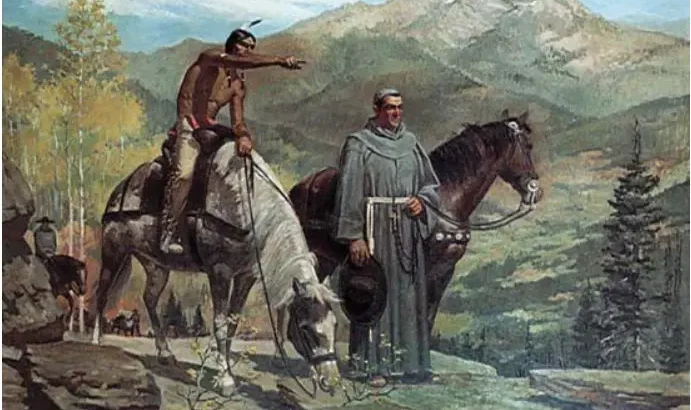
The Domínguez–Escalante Expedition of 1776
One of the most important explorations of Colorado occurred in 1776.
That same year, while the American colonies declared independence from Britain, two Franciscan friars embarked on an ambitious journey through the American Southwest.
They were:
- Father Francisco Atanasio Domínguez
- Father Silvestre Vélez de Escalante
Their goal was to discover a route connecting:
- Santa Fe, New Mexico
- Spanish missions in California
The expedition traveled through significant portions of present-day Colorado.
Exploring Colorado’s Interior
The Domínguez–Escalante expedition documented:
- Rivers
- Mountains
- Valleys
- Native communities
The explorers kept detailed journals describing:
- Geography
- Climate
- Indigenous cultures
- Travel challenges
These records remain invaluable historical sources for understanding eighteenth-century Colorado.
Although the expedition failed to reach California, it greatly expanded European knowledge of the Rocky Mountain region.
Encounters with the Utes
During their travels, the friars met Ute communities.
The Spanish attempted to encourage the Utes to:
- Settle permanently
- Join missions
- Adopt Spanish customs
The Utes showed little interest.
Their mobile lifestyle and deep connection to their traditional culture made Spanish settlement schemes unattractive.
As a result, Spanish influence in Colorado remained limited.
Spanish Colorado: A Frontier Region
Throughout the eighteenth century, Colorado remained a distant frontier.
Unlike New Mexico, it contained:
- No major Spanish settlements
- Few permanent European residents
- Minimal military presence
Spanish maps often claimed Colorado as part of New Spain, but actual control remained weak.
Native peoples continued to dominate the region.
Nevertheless, Spanish explorers left a lasting legacy through place names and geographic knowledge.
The Louisiana Purchase Changes Everything
At the beginning of the nineteenth century, North America experienced a dramatic political transformation.
1800
Spain transferred Louisiana to France.
1803
France sold Louisiana to the United States.
This transaction became known as the Louisiana Purchase.
The purchase doubled the size of the United States and dramatically increased American interest in western exploration.
Although boundaries remained uncertain, portions of present-day Colorado were now claimed by the United States.
Thomas Jefferson’s Vision
President Thomas Jefferson believed exploration was essential.
He wanted Americans to understand:
- Geography
- Natural resources
- Trade opportunities
- Indigenous nations
This vision led to several government-sponsored expeditions.
The most famous was the expedition of Meriwether Lewis and William Clark.
However, another explorer would become permanently associated with Colorado.
Zebulon Pike’s Expedition
In 1806, Lieutenant Zebulon Montgomery Pike led an expedition into the western frontier.
His mission included:
- Exploring rivers
- Mapping territory
- Contacting Indigenous peoples
- Gathering strategic information
Pike and his party traveled westward across the Great Plains toward the Rocky Mountains.
Discovery of a Famous Mountain
During November 1806, Pike observed a magnificent mountain rising above the distant horizon.
The peak impressed him deeply.
He called it Grand Peak.
Today it is known as:
Pikes Peak
One of Colorado’s most famous landmarks.
The mountain would eventually become an enduring symbol of the state.
Pike’s Failed Climb
Determined to reach the summit, Pike attempted an ascent.
Unfortunately, he underestimated:
- Distance
- Weather
- Terrain
- Elevation
The expedition lacked proper equipment and winter clothing.
After struggling through deep snow and freezing temperatures, Pike abandoned the attempt.
Ironically, the mountain later received his name despite the fact that he never reached the summit.
Arrested by Spain
Pike’s expedition encountered an unexpected problem.
Believing they remained within American territory, Pike and his men actually entered Spanish-controlled lands.
Spanish authorities viewed the American military expedition with suspicion.
Spanish soldiers arrested Pike and escorted him into Mexico.
Although treated relatively well, his maps and documents were confiscated.
After several months, he was released and returned to the United States.
Why Pike’s Expedition Mattered
Despite its setbacks, Pike’s expedition became highly influential.
His published reports introduced Americans to:
- The Rocky Mountains
- Colorado’s geography
- Indigenous peoples
- Western opportunities
His descriptions helped spark interest in future western expansion.
Americans increasingly viewed the Rocky Mountain region as a land of opportunity.
The Beginning of the Fur Trade Era
Following Pike’s expedition, another economic force transformed Colorado.
That force was:
The Fur Trade
During the early nineteenth century, beaver fur became extremely valuable.
Fashionable hats made from beaver felt were in enormous demand throughout Europe and the United States.
This demand attracted adventurous trappers into Colorado’s wilderness.
Conclusion of Part 3
By the early 1800s, Colorado stood at the intersection of powerful historical forces. Spanish exploration had introduced new technologies and animals, Native nations continued to shape the region, and American explorers such as Zebulon Pike had begun opening the Rocky Mountains to future expansion.
The stage was now set for a new era dominated by fur traders, mountain men, exploration, migration, and ultimately the discovery of gold.
History of Colorado: From Ancient Civilizations to the Birth of the Centennial State (Part 4)
The Fur Trade Era Begins
During the early nineteenth century, Colorado entered a new phase of history shaped by commerce, exploration, and cultural exchange.
The driving force behind this transformation was the fur trade.
Across Europe and the United States, beaver fur was highly prized for manufacturing fashionable felt hats. Demand was so great that traders and trappers ventured deep into the Rocky Mountains searching for beaver-rich streams and rivers.
Colorado’s wilderness soon became an important center of this lucrative industry.
The Mountain Men
The men who trapped beaver throughout the Rocky Mountains became known as Mountain Men.
These individuals were among the most rugged and independent figures in American history.
They endured:
- Harsh winters
- Dangerous wildlife
- Isolation
- Mountain terrain
- Conflicts with rival groups
Mountain men often spent months alone in remote valleys and mountain streams.
To survive, they learned:
- Indigenous languages
- Wilderness skills
- Navigation techniques
- Hunting methods
- Local geography
Their knowledge later proved invaluable to settlers, military expeditions, and explorers.
Life of a Trapper
The annual cycle of a mountain man followed a predictable pattern.
Spring and Fall
Prime trapping seasons when beaver pelts were thickest.
Summer
Large gatherings called rendezvous.
Winter
Sheltering in camps or trading posts while waiting for severe weather to pass.
Life was physically demanding.
Trappers often stood in icy rivers for hours while checking traps, risking illness and injury.
Despite the hardships, the possibility of profit attracted adventurous individuals from across America and Europe.
The Rendezvous System
One of the most unique institutions of the fur trade era was the Rendezvous System.
Instead of traveling thousands of miles to eastern markets, trappers gathered annually at designated locations.
These gatherings served multiple purposes:
- Selling furs
- Purchasing supplies
- Trading goods
- Socializing
- Sharing information
For many mountain men, rendezvous represented the only opportunity each year to interact with large groups of people.
The events became famous for:
- Storytelling
- Gambling
- Horse racing
- Competitions
- Celebrations
Several rendezvous sites were located near Colorado and helped establish the region’s importance in western commerce.
Brown’s Hole: A Frontier Gathering Place
One of the most important rendezvous locations was Brown’s Hole, situated near the modern borders of Colorado, Utah, and Wyoming.
The valley offered:
- Abundant grass
- Water supplies
- Hunting opportunities
- Natural protection
Brown’s Hole became a meeting place for:
- Trappers
- Native Americans
- Traders
- Explorers
The gatherings there symbolized the multicultural nature of the Rocky Mountain frontier.
Famous Mountain Men of Colorado
Several legendary figures worked throughout Colorado’s mountains.
Jim Bridger
Bridger became one of the most knowledgeable explorers of the Rocky Mountains.
His discoveries and guidance helped later settlers travel through western territories.
Kit Carson
Carson trapped in Colorado before becoming one of the most famous scouts and guides in American history.
His familiarity with western landscapes made him indispensable to future expeditions.
The Bent Brothers
Charles and William Bent established important trade relationships throughout the region.
Their influence helped connect Native American communities with expanding American commercial networks.
Bent’s Fort: Colorado’s Greatest Trading Post
In 1833, the Bent brothers established Bent’s Fort along the Arkansas River.
Bent’s Fort became one of the most important commercial centers in the American West.
The massive adobe structure contained:
- Living quarters
- Storage facilities
- Workshops
- Trading rooms
- Defensive walls
People from diverse backgrounds visited the fort, including:
- Cheyenne
- Arapaho
- Mountain men
- Mexican traders
- American merchants
The fort served as a cultural and economic crossroads.
Cultural Exchange on the Frontier
Bent’s Fort demonstrated how interconnected frontier societies had become.
Trade goods included:
- Buffalo robes
- Horses
- Metal tools
- Firearms
- Cloth
- Food products
The Bent family maintained strong relationships with Indigenous communities.
These partnerships contributed significantly to the fort’s success and stability.
Decline of the Fur Trade
By the late 1830s and early 1840s, the fur trade began to decline.
Several factors contributed:
Over-Trapping
Beaver populations decreased dramatically.
Changing Fashion
Silk hats became more fashionable than beaver felt hats.
Economic Shifts
Markets evolved and profits fell.
As demand declined, many mountain men sought new careers.
Some became:
- Guides
- Scouts
- Ranchers
- Traders
Others participated in future exploration and settlement efforts.
The era of the mountain man was drawing to a close.
Government Expeditions and Scientific Exploration
As American interest in the West increased, government-sponsored expeditions became more common.
Officials wanted accurate information about:
- Geography
- Natural resources
- Transportation routes
- Settlement opportunities
These surveys would help guide future migration and economic development.
John C. Frémont: The Pathfinder
One of the most influential explorers of the period was John C. Frémont.
Known as “The Pathfinder,” Frémont conducted multiple expeditions through the Rocky Mountains and surrounding territories.
His goals included:
- Mapping routes
- Studying landscapes
- Assessing resources
- Gathering strategic information
His reports became widely read throughout the United States.
Mapping the West
Frémont’s detailed maps significantly improved American understanding of Colorado and the broader West.
Many immigrants relied on these maps when planning journeys westward.
His expeditions helped transform the Rocky Mountains from mysterious wilderness into a region increasingly accessible to settlers.
The Role of Kit Carson
Many of Frémont’s successes depended on the expertise of Kit Carson.
Carson served as:
- Guide
- Interpreter
- Scout
- Advisor
His knowledge of trails, weather patterns, and Native cultures was essential.
Without experienced frontiersmen like Carson, many government expeditions would have struggled to succeed.
Manifest Destiny and American Expansion
During the 1840s, many Americans embraced the idea of Manifest Destiny.
This belief held that the United States was destined to expand across North America.
Supporters argued that expansion would:
- Spread democracy
- Promote economic growth
- Increase national power
Colorado became increasingly important within this broader vision of western development.
The Oregon and California Trails
As migration increased, thousands of settlers traveled westward.
Major routes included:
Oregon Trail
Leading settlers to the Pacific Northwest.
California Gold Rush Routes
Used by fortune seekers heading toward California.
Although these trails often passed north or south of Colorado, they increased American familiarity with the region and encouraged future settlement.
The Mexican–American War
A major turning point came with the Mexican–American War.
The conflict arose from disputes involving:
- Texas
- Territorial boundaries
- American expansion
The war ended with a decisive American victory.
Treaty of Guadalupe Hidalgo
In 1848, Mexico and the United States signed the Treaty of Guadalupe Hidalgo.
The treaty transferred vast territories to the United States.
These lands included portions of present-day:
- Colorado
- Arizona
- New Mexico
- Nevada
- Utah
- California
Colorado now fell firmly within expanding American territory.
Indigenous Peoples and American Expansion
While Americans celebrated territorial growth, Indigenous nations viewed developments differently.
For Native peoples:
- Their lands had not been voluntarily surrendered
- Traditional hunting areas remained vital
- Treaty negotiations often excluded many community members
As migration increased, conflicts became more common.
The stage was being set for major confrontations between settlers and Native nations.
Fort Laramie Treaty of 1851
The United States attempted to reduce tensions through diplomacy.
Representatives of several Plains tribes met with government officials during the Treaty of Fort Laramie.
The treaty sought to:
- Define tribal territories
- Ensure peace
- Protect travel routes
- Establish compensation systems
However, many problems remained unresolved.
Different cultural understandings of land ownership and political authority created ongoing misunderstandings.
Colorado on the Eve of Transformation
By the mid-1850s, Colorado remained sparsely settled by American standards.
The region contained:
- Trading posts
- Small settlements
- Military outposts
- Indigenous communities
Most of Colorado was still dominated by Native peoples.
Yet powerful forces were gathering.
Exploration had mapped the region.
Trade had connected it to national markets.
Migration was increasing.
Only one ingredient remained necessary to trigger explosive growth:
Gold
That discovery would soon transform Colorado forever.
Conclusion of Part 4
The Fur Trade Era introduced Colorado to national and international markets, while explorers such as Frémont and Kit Carson expanded knowledge of the Rocky Mountain region. The Mexican–American War and the Treaty of Guadalupe Hidalgo brought Colorado firmly under American control, setting the stage for dramatic change.
As the 1850s came to an end, Colorado stood on the brink of one of the most important events in its history—the Gold Rush.
History of Colorado: From Ancient Civilizations to the Birth of the Centennial State (Part 5)
The Discovery That Changed Colorado Forever
By the late 1850s, Colorado remained a remote frontier region inhabited primarily by Native American peoples, a small number of traders, explorers, and scattered settlers.
Everything changed in 1858.
A discovery along the banks of the South Platte River triggered one of the most significant migrations in American history and transformed Colorado from a frontier wilderness into an emerging economic center.
That discovery was gold.
The Colorado Gold Rush Begins
In 1858, a group of prospectors led by William Green Russell arrived at the confluence of Cherry Creek and the South Platte River.
Russell had previous mining experience in Georgia and believed valuable minerals might exist in the Rocky Mountain region.
After extensive searching, his party discovered small quantities of gold.
Although the initial finds were modest, the news spread rapidly.
Soon newspapers across the United States began reporting exciting stories about Colorado’s mineral wealth.
What followed became known as the Pike’s Peak Gold Rush.
“Pike’s Peak or Bust”
The phrase “Pike’s Peak or Bust” became the slogan of the gold rush.
Thousands of hopeful prospectors headed west carrying dreams of instant wealth.
The words appeared on:
- Covered wagons
- Equipment
- Banners
- Personal belongings
Many fortune seekers believed gold could be collected easily from streams and riverbeds.
Reality proved far more difficult.
Nevertheless, the promise of wealth continued attracting migrants from across America and Europe.
The Great Migration of 1859
The year 1859 witnessed an extraordinary influx of people into Colorado.
Historians estimate that tens of thousands of individuals traveled westward seeking fortune.
They arrived by:
- Wagon trains
- Horseback
- Foot
- Handcarts
The journey itself was dangerous.
Travelers faced:
- Disease
- Harsh weather
- Food shortages
- Accidents
- Geographic obstacles
Despite these challenges, the migration continued at an astonishing pace.
Gregory Gulch and the Real Gold Strike
Many early prospectors became discouraged after finding little gold.
Some returned east, painting “Pike’s Peak Bust” on their wagons.
Everything changed in May 1859.
A prospector named John Gregory discovered a rich gold deposit in a mountain valley west of Denver.
The site became known as Gregory Gulch.
Unlike earlier discoveries, Gregory’s find contained substantial quantities of gold.
The strike confirmed that Colorado possessed genuine mineral wealth.
The gold rush immediately accelerated.
Rise of the Mining Camps
Following Gregory’s discovery, mining camps appeared almost overnight.
Some of the most important included:
- Central City
- Black Hawk
- Idaho Springs
- Georgetown
These settlements began as collections of tents and crude structures.
Within months, many evolved into thriving communities.
Mining districts attracted:
- Prospectors
- Merchants
- Laborers
- Investors
- Entrepreneurs
Every new discovery brought additional waves of migration.
Life in the Mining Camps
Early mining towns were rough and often chaotic.
Most lacked:
- Formal government
- Police departments
- Courts
- Public services
To maintain order, miners created their own systems of governance.
Mining districts established rules regarding:
- Property rights
- Claim ownership
- Dispute resolution
These locally developed systems played a crucial role in stabilizing frontier communities.
Hard Rock Mining Changes the Industry
Initially, prospectors searched stream beds for placer gold.
However, the richest deposits were often embedded deep within mountain rock formations.
Extracting this gold required:
- Tunnels
- Heavy machinery
- Skilled labor
- Significant investment
As a result, mining gradually shifted from individual prospectors to organized companies.
This transition marked the beginning of Colorado’s industrial mining era.
A Diverse Population
Colorado’s mining boom attracted people from around the world.
The population included:
Americans
Migrants arrived from nearly every state.
Europeans
Particularly immigrants from:
- Germany
- Ireland
- Cornwall
Cornish miners were especially valued because of their expertise in hard-rock mining.
Chinese Immigrants
Many established businesses and provided essential services.
African Americans
Both free African Americans and formerly enslaved individuals sought opportunities in Colorado.
Mexican Miners
They contributed valuable mining techniques developed in Mexico and South America.
The result was a remarkably diverse frontier society.
Women in the Gold Rush
Although men greatly outnumbered women, women played important roles in Colorado’s early communities.
Many operated:
- Boarding houses
- Restaurants
- Hotels
- Shops
Some women even owned mining claims and participated directly in mining operations.
The frontier environment occasionally provided opportunities unavailable to women in more established eastern communities.
The Birth of Denver
Among the settlements emerging during the gold rush, none would become more important than Denver.
Named after James Denver, governor of Kansas Territory, Denver occupied a strategic location near the South Platte River.
Its advantages included:
- Transportation access
- Commercial opportunities
- Proximity to mining districts
Denver quickly developed into the primary supply center for Colorado’s mining industry.
Merchants supplied miners with:
- Food
- Equipment
- Clothing
- Tools
As mining expanded, Denver grew into Colorado’s dominant city.
Impact on Native American Communities
The gold rush dramatically affected Indigenous peoples.
For generations, Native nations had used Colorado’s lands for:
- Hunting
- Gathering
- Travel
- Trade
Suddenly, thousands of newcomers occupied these same territories.
Settlers often viewed the land as available for development.
Native peoples saw an invasion of their homelands.
Tensions increased rapidly.
The Fort Wise Treaty of 1861
In response to growing conflict, the United States government negotiated the Treaty of Fort Wise in 1861.
The treaty significantly reduced the lands assigned to the Cheyenne and Arapaho.
Compared to previous agreements, the tribes lost vast portions of their traditional territory.
Many Indigenous leaders opposed the treaty.
They argued:
- Compensation was inadequate
- The agreement was unfair
- Traditional lands were being surrendered
The treaty created divisions within Native communities and intensified resentment toward federal authorities.
Creation of Colorado Territory
As population increased, political organization became necessary.
On February 28, 1861, the United States Congress created the Colorado Territory.
The new territory combined portions of:
- Kansas Territory
- Nebraska Territory
- Utah Territory
- New Mexico Territory
This marked an important milestone on Colorado’s path toward statehood.
William Gilpin: First Territorial Governor
President Abraham Lincoln appointed William Gilpin as Colorado’s first territorial governor.
Gilpin faced numerous challenges:
- Establishing government institutions
- Managing rapid population growth
- Encouraging economic development
- Addressing Native American relations
The territorial government struggled to balance expansion with stability.
The Civil War and Colorado
The creation of Colorado Territory coincided with the outbreak of the American Civil War.
Although far from the major battlefields, Colorado contributed troops and resources to the Union cause.
The territory’s mineral wealth became strategically important.
Gold from Colorado helped support the Union economy during the war.
Growing Conflict on the Plains
During the early 1860s, relations between settlers and Native peoples deteriorated.
Several factors contributed:
- Loss of tribal lands
- Declining buffalo populations
- Increased settlement
- Military expansion
Some Native groups resisted encroachment through raids on:
- Ranches
- Stage routes
- Wagon trains
Settlers often responded with demands for stronger military action.
Violence escalated throughout the region.
Colonel John Chivington
One of the most controversial figures in Colorado history was John Chivington.
A former Methodist minister, Chivington commanded Colorado volunteer troops during the Civil War era.
He developed a reputation for extreme hostility toward Native Americans.
His actions would soon lead to one of the darkest events in Colorado history.
The Sand Creek Massacre
On November 29, 1864, tragedy struck along Sand Creek in southeastern Colorado.
A camp of Cheyenne and Arapaho people led by Black Kettle had established a settlement near Sand Creek.
Black Kettle believed his people were under U.S. Army protection.
To demonstrate peaceful intentions, he reportedly displayed:
- An American flag
- A white flag
Despite these signals, Chivington ordered an attack.
A National Tragedy
The attack became known as the Sand Creek Massacre.
Hundreds of Colorado volunteers assaulted the camp.
Many victims were:
- Women
- Children
- Elderly individuals
The violence shocked observers and later investigations condemned the attack.
Although Chivington was never criminally punished, congressional inquiries criticized his actions.
Today, Sand Creek is remembered as one of the most tragic episodes in American frontier history.
Consequences of Sand Creek
The massacre had lasting consequences.
Many Native peoples who had previously sought peace lost faith in negotiations.
Conflict intensified across the Great Plains.
Raids and military campaigns increased throughout the following years.
Trust between Indigenous nations and the United States government suffered severe damage.
Colorado’s Future Takes Shape
Despite violence and instability, Colorado continued growing.
Mining wealth attracted investment.
New communities appeared across the territory.
Transportation networks expanded.
Political institutions matured.
The foundations of modern Colorado were beginning to emerge.
Yet even larger changes lay ahead.
Conclusion of Part 5
The Pike’s Peak Gold Rush transformed Colorado from a remote frontier into one of the most dynamic regions in the American West. The discovery of gold led to rapid population growth, the creation of Colorado Territory, and the rise of Denver. At the same time, increasing settlement produced devastating consequences for Native peoples, culminating in the Sand Creek Massacre.
History of Colorado – Continue Part 6
Indigenous Resistance in the Front Range and Plains
As Euro-American settlement expanded deeper into the region during the mid-to-late 19th century, resistance from Indigenous nations intensified. The Cheyenne and Arapaho peoples, who had long lived across the plains of what is now Colorado, found their territories increasingly encroached upon by settlers, miners, and military outposts.
Cheyenne people and Arapaho people initially attempted diplomacy through treaties, but repeated violations of agreements by the U.S. government led to growing conflict. The most tragic outcome of this tension was the Sand Creek Massacre (1864), which deepened cycles of retaliation and distrust across the region.
By the 1870s, most Indigenous groups in Colorado were being forcibly relocated to reservations, but resistance continued through smaller, more mobile conflicts, particularly in remote mountain and river valleys.
The Medicine Lodge Treaty and Forced Relocation
One of the key legal frameworks that reshaped Indigenous life in the region was the Medicine Lodge Treaty, signed in 1867.
This treaty aimed to:
- Relocate Southern Plains tribes to designated reservation lands
- Open vast areas of the plains to white settlement
- Reduce armed conflict between settlers and Native nations
Although presented as a peace agreement, the treaty resulted in significant loss of traditional lands for the Cheyenne, Arapaho, Kiowa, and Comanche peoples. Many groups resisted relocation or returned seasonally to traditional hunting grounds, leading to continued military enforcement throughout Colorado and surrounding territories.
Ute Conflicts and the Displacement from the Mountains
Unlike the plains tribes, the Ute people historically controlled large portions of the Rocky Mountains. However, the discovery of gold and silver in the high country dramatically increased pressure on their territory.
The U.S. government gradually pushed the Ute onto smaller reservation lands through a series of treaties, culminating in violent conflicts during the 1870s and 1880s.
Key developments included:
- Mining expansion into Ute-controlled valleys
- Military campaigns enforcing relocation policies
- Breakdown of earlier treaty agreements
By the end of this period, most Ute bands had been removed from central Colorado to reservations in present-day Utah and southwestern Colorado, marking a major transformation of the region’s cultural landscape.
The White River War
One of the most significant confrontations of this era was the White River War.
The conflict began after tensions escalated between U.S. Indian agents and the Ute, particularly due to mismanagement, corruption, and cultural misunderstandings. A violent confrontation resulted in the killing of Indian Agent Nathan Meeker and others at the White River Agency.
In response:
- U.S. military forces launched punitive expeditions
- The Ute were forcibly removed from much of western Colorado
- Survivors were relocated to reservations in Utah
The White River War effectively ended significant Indigenous resistance within Colorado’s borders, consolidating federal control over the region.
Colorado’s Silver Boom and Mining Expansion
While conflict reshaped the human geography of Colorado, economic transformation was equally dramatic. Following the earlier gold rush, the 1870s and 1880s saw a massive silver boom that turned Colorado into one of the richest mining regions in the United States.
The discovery of silver deposits in areas such as Leadville triggered explosive growth in population, investment, and infrastructure.
Mining developments included:
- Deep shaft mining techniques replacing surface prospecting
- Formation of large mining corporations
- Rapid expansion of boomtown economies
This era created enormous wealth for some, but also extreme labor hardship, dangerous working conditions, and economic inequality.
Leadville: The Silver Capital of the Rockies
The town of Leadville became the epicenter of the silver rush.
At its peak, Leadville was:
- One of the highest incorporated cities in the United States
- Home to thousands of miners and entrepreneurs
- A symbol of the rapid boom-and-bust cycle of mining towns
Famous figures, including mining magnates and industrial investors, built fortunes here. At the same time, labor unrest began to emerge as miners demanded better wages and safer conditions, setting the stage for future labor movements in Colorado.
Railroad Expansion and Economic Integration
The mining boom would not have been possible without the rapid expansion of rail infrastructure. Railroads connected remote mining towns with national markets, allowing ore and supplies to move efficiently across long distances.
One of the most important developments was the rise of the Denver & Rio Grande Railroad.
This railroad:
- Connected Denver with southern and western mining districts
- Opened remote mountain regions to large-scale industry
- Played a key role in Colorado’s economic integration into the national economy
Rail lines also helped establish Denver as a central hub for commerce, transportation, and finance in the Rocky Mountain region.
Tourism and the Rise of Colorado Springs
While mining dominated the economy, another industry began to emerge—tourism and health travel. The natural beauty, dry climate, and mineral springs of Colorado attracted visitors seeking rest and healing.
The city of Colorado Springs became a major destination for:
- Health resorts and spas
- Wealthy Eastern tourists seeking mountain retreats
- Religious and educational institutions
Nearby attractions such as Garden of the Gods and Pikes Peak became iconic symbols of Colorado’s scenic identity. Tourism gradually diversified the economy and helped reshape Colorado’s national reputation from a frontier mining territory to a destination of natural beauty and recreation.
The Road Toward Statehood in 1876
By the mid-1870s, Colorado had undergone rapid transformation—economically, politically, and demographically. The population growth driven by mining, railroads, and settlement created increasing demand for formal state governance.
Key factors leading to statehood included:
- Expanding non-Indigenous population
- Economic importance of mining and railroads
- Desire for local political control and representation
Finally, in 1876—coinciding with the United States Centennial—Colorado was admitted to the Union as the 38th state, earning the nickname “The Centennial State.”
This marked the beginning of a new political era, even as economic booms, labor struggles, and Indigenous displacement continued to shape its development.
History of Colorado – Continue Part 7
Colorado’s Early Statehood Era (1876–1900)
After achieving statehood in 1876, Colorado entered a period of rapid transformation. The young state was still deeply shaped by mining wealth, railroad expansion, and frontier settlement, but it also began building formal political institutions, legal systems, and urban infrastructure.
The post-statehood years were defined by a mix of prosperity and instability. Mining booms brought immense wealth, but they also created economic inequality, labor conflict, and environmental strain across the Rocky Mountain region.
Political Development and State Institutions
Following statehood, Colorado quickly organized its government structure, including a state legislature, judicial system, and executive offices. Early political life was heavily influenced by mining interests, railroad companies, and land developers.
Key developments included:
- Formation of state-level legal and taxation systems
- Expansion of county governments across rural mining regions
- Growing political influence of industrial and business elites
At the same time, debates emerged over regulation, labor rights, and public land use, setting the stage for future political struggles in the Progressive Era.
The Expansion and Decline of the Silver Boom
The silver industry, which had fueled much of Colorado’s early growth, reached its peak in the late 1870s and 1880s. Towns such as Leadville became symbols of extreme wealth and rapid urban growth.
However, the prosperity was not permanent.
A major turning point came with the Panic of 1893, when the U.S. government’s decision to repeal the Sherman Silver Purchase Act caused silver prices to collapse. This triggered:
- Widespread mine closures
- Massive unemployment among miners
- Bankruptcy of mining towns and businesses
- A severe economic depression across Colorado
This crisis marked the end of the silver boom and forced the state to diversify its economy.
The Rise of Labor Movements and Mining Struggles
As mining conditions worsened, labor tensions increased dramatically. Workers faced dangerous environments, low wages, and long hours, while mine owners often controlled housing, stores, and local economies.
This led to the rise of organized labor groups, especially among miners in the Rocky Mountains.
One of the most influential organizations was the Western Federation of Miners.
Labor unrest included:
- Strikes demanding safer working conditions
- Conflicts between miners and mine owners
- Occasional violent confrontations involving private security and state militias
These struggles laid the foundation for Colorado’s later reputation as a center of labor activism in the American West.
Urban Growth: Denver’s Transformation
During this period, Denver rapidly evolved from a frontier settlement into a modern urban center. Its strategic location as a transportation hub helped it dominate commerce in the region.
Denver’s growth was fueled by:
- Railroad connectivity across the Rocky Mountains
- Expansion of banking and financial services
- Increasing migration from rural mining towns
By the late 19th century, Denver had developed theaters, newspapers, schools, and civic institutions, becoming the political and economic heart of Colorado.
Agricultural Expansion and Rural Settlement
While mining and cities dominated headlines, agriculture quietly became a vital part of Colorado’s economy. Irrigation projects and rail access allowed farming to expand across the plains and river valleys.
Major agricultural developments included:
- Construction of irrigation canals and reservoirs
- Growth of wheat, cattle, and dairy industries
- Settlement of homesteaders under federal land policies
However, farming in Colorado remained challenging due to droughts, unpredictable weather, and water scarcity, making agriculture a constant struggle for many rural communities.
Railroads and Regional Integration
Railroads continued to shape Colorado’s development after statehood, connecting mining towns, agricultural regions, and urban centers.
The expansion of lines such as the Denver & Rio Grande Railroad played a critical role in:
- Moving minerals and agricultural goods to national markets
- Supporting tourism and passenger travel
- Encouraging settlement in remote areas
Railroads effectively tied Colorado’s economy to national industrial growth, making it an essential part of the American economic system.
Education, Culture, and Social Development
As stability increased in urban areas, Colorado also invested in education and cultural institutions. Schools, libraries, and universities began to expand during the late 19th century.
Important trends included:
- Establishment of public school systems
- Growth of higher education institutions
- Development of newspapers and civic organizations
These institutions helped shape a more structured and educated society, moving Colorado further away from its frontier origins.
Environmental Change and Resource Pressure
Rapid industrial and population growth also had significant environmental consequences. Mining, logging, and railroad construction altered Colorado’s landscapes.
Key impacts included:
- Deforestation in mountain regions
- Water diversion for agriculture and mining
- Pollution from mining waste and smelting operations
These changes marked the beginning of long-term environmental challenges that would later influence conservation movements in the 20th century.
Preparing for a New Century
By the end of the 19th century, Colorado had transitioned from a frontier mining territory into a diversified state with growing cities, industries, and infrastructure. However, it also faced unresolved tensions:
- Economic instability following the silver crash
- Labor disputes between workers and industrial owners
- Ongoing environmental degradation
- Uneven development between urban and rural areas
Despite these challenges, Colorado entered the 20th century with a strong foundation for industrial growth, tourism expansion, and political reform.
History of Colorado – Continue Part 8
Colorado in the Progressive Era (1900–1920)
As the 20th century began, Colorado entered the Progressive Era—a time of reform movements aimed at addressing the social, political, and economic problems created during rapid industrialization. The state was no longer a frontier society; it was becoming a modern industrial and urban region shaped by mining, railroads, agriculture, and growing cities.
Reform-minded citizens pushed for greater government accountability, labor protections, and public welfare improvements.
Political Reform and Direct Democracy
One of the most significant political changes in Colorado during this period was the adoption of direct democracy reforms.
Key reforms included:
- Initiative (allowing citizens to propose laws)
- Referendum (allowing citizens to approve or reject laws)
- Recall (allowing removal of elected officials)
These reforms reduced the power of political machines and gave more influence to ordinary citizens in government decision-making.
Colorado became one of the leading states in adopting Progressive political systems, influencing reforms across the United States.
Labor Conflict and the Mining Industry
Labor unrest continued to define Colorado’s industrial landscape, especially in the mining sector. Workers still faced dangerous conditions, low wages, and strong opposition from mining companies.
Tensions escalated in several regions where strikes and protests became common.
The Western Federation of Miners remained central in organizing labor resistance and advocating for workers’ rights.
Key issues included:
- Mine safety regulations
- Wage disputes
- Company-controlled housing and stores (company towns)
- Use of private security forces against striking workers
These conflicts often led to violent confrontations, shaping Colorado’s national reputation as a center of labor struggle.
The Ludlow Massacre (1914)
One of the most tragic events in Colorado’s labor history was the Ludlow Massacre.
During a coal miners’ strike against the Colorado Fuel and Iron Company:
- Striking miners and their families lived in tent colonies
- The Colorado National Guard was deployed to suppress the strike
- Violence erupted, resulting in the deaths of miners, women, and children
The aftermath of Ludlow shocked the nation and led to widespread criticism of corporate power and state intervention in labor disputes.
This event became a turning point in American labor history and strengthened calls for reform.
Industrial Expansion and Urban Growth
Despite labor unrest, Colorado’s economy continued to expand in the early 20th century. Cities grew rapidly due to mining, transportation, and manufacturing industries.
Urban centers such as Denver became increasingly modern, featuring:
- Expanding streetcar systems
- New commercial districts and skyscrapers
- Growth in banking, insurance, and trade services
- Rising population from migration and immigration
The state was becoming more urbanized, shifting away from its earlier mining-dominated frontier identity.
Agriculture, Irrigation, and Rural Life
Agriculture remained a crucial part of Colorado’s economy, especially on the eastern plains. However, success depended heavily on irrigation and water management systems.
Developments included:
- Expansion of irrigation districts
- Construction of dams and canals
- Growth of sugar beet, wheat, and cattle industries
However, rural life remained difficult due to:
- Water shortages
- Price fluctuations in agricultural markets
- Isolation of farming communities
Despite challenges, agriculture helped stabilize Colorado’s economy beyond mining cycles.
Transportation and Infrastructure Development
Transportation continued to play a central role in Colorado’s development. Railroads expanded service while new technologies such as automobiles began to appear.
The Denver & Rio Grande Railroad remained a key infrastructure system, supporting:
- Freight movement across mountainous terrain
- Passenger travel between cities and mining towns
- Economic integration with national markets
Road construction also began increasing, laying the foundation for future highway systems.
Education, Culture, and Social Reform
The Progressive Era also brought improvements in education and social institutions. Colorado expanded public services and invested in civic development.
Key developments included:
- Expansion of public school enrollment
- Growth of universities and teacher training institutions
- Increased literacy and newspaper circulation
- Development of cultural institutions such as museums and libraries
These changes reflected a broader national trend toward modernization and social reform.
Environmental Awareness and Conservation Beginnings
As industrial activity increased, concerns about environmental degradation began to emerge. Mining pollution, deforestation, and water diversion raised early awareness about conservation.
Influenced by national figures like Theodore Roosevelt, Colorado began taking early steps toward:
- Forest protection policies
- Land management reforms
- Preservation of natural landscapes
These efforts marked the beginning of Colorado’s long relationship with environmental conservation.
Toward a Modern State Identity
By the end of World War I (1918), Colorado had undergone significant transformation. It was no longer defined only by mining camps and frontier settlements, but by cities, industries, political reforms, and growing cultural institutions.
However, the state still faced major challenges:
- Labor unrest and inequality
- Environmental pressures from industrial growth
- Economic dependence on cyclical industries
- Rural-urban disparities
Despite these issues, Colorado was firmly positioned as a modernizing state entering the complex realities of the 20th century.
History of Colorado – Continue Part 9
Colorado Between the World Wars (1920–1940)
After World War I, Colorado entered a period of adjustment and modernization. The state continued shifting away from its mining-dominated economy toward a more diverse structure based on agriculture, tourism, manufacturing, and urban services. However, this period also brought economic instability, especially during the Great Depression.
Cities expanded, rural communities struggled, and the federal government became increasingly involved in supporting Colorado’s economy and infrastructure.
The Post-War Boom and Economic Adjustment
The early 1920s brought a brief period of optimism. Mining activity continued at reduced levels, agriculture expanded modestly, and cities like Denver experienced steady growth.
Urban life in Denver became more modern, with:
- Expanding automobile ownership
- Growth of commercial districts
- Development of entertainment industries (cinemas, theaters, radio)
- Improved public infrastructure
However, this growth was uneven, and many rural and mining communities faced decline as ore production decreased and commodity prices fluctuated.
Decline of the Mining Industry
By the 1920s, Colorado’s once-dominant mining industry was in long-term decline. Several factors contributed:
- Exhaustion of easily accessible mineral deposits
- Falling global prices for silver and gold
- Increased mechanization reducing labor demand
- Competition from other mining regions
Many historic mining towns experienced population loss, leaving behind “ghost towns” scattered across the Rocky Mountains. This shift marked the end of Colorado’s first great economic cycle.
Agriculture and Rural Hardship
Agriculture remained essential to Colorado’s economy, particularly on the eastern plains. However, farmers faced persistent challenges:
- Drought conditions in several years
- Falling crop prices after World War I
- High transportation and equipment costs
Many rural families struggled to maintain livelihoods, and farm foreclosures increased during the late 1920s.
Despite these difficulties, irrigation systems and cooperative farming efforts helped sustain parts of the agricultural sector.
Tourism and the Growth of Natural Attractions
During this period, tourism began to emerge as a more important economic sector. Colorado’s mountains, national parks, and scenic landscapes attracted visitors from across the United States.
The city of Colorado Springs continued to grow as a resort and wellness destination, known for:
- Mineral springs and health resorts
- Proximity to Pikes Peak and Garden of the Gods
- Religious and educational institutions
- Luxury hotels catering to tourists
Tourism gradually became a stabilizing force in Colorado’s economy, especially as other industries declined.
The Great Depression and Economic Crisis
The most severe challenge of this period was the Great Depression, which began in 1929.
Colorado was heavily impacted:
- Banks failed and credit collapsed
- Unemployment rose sharply in urban and mining areas
- Farmers faced foreclosures and drought conditions
- Business activity declined across all sectors
The crisis affected both cities and rural communities, leading to widespread hardship across the state.
The New Deal in Colorado
In response to the Great Depression, President Franklin D. Roosevelt’s New Deal programs brought significant federal investment to Colorado.
Key initiatives included:
- Public works projects (roads, bridges, dams)
- Employment programs for unemployed workers
- Agricultural price support programs
- Rural electrification efforts
These programs helped stabilize the economy and modernize infrastructure. Many of Colorado’s highways, water systems, and public buildings were built during this era.
Infrastructure Development and Modernization
The 1930s saw major improvements in infrastructure, much of it funded by New Deal agencies. Transportation and public utilities expanded significantly.
The Denver & Rio Grande Railroad continued to play an important role, but automobile travel was becoming increasingly dominant.
Major developments included:
- Expansion of paved road networks
- Improved mountain highways and scenic routes
- Growth of bus and trucking industries
- Increased connectivity between rural and urban areas
These changes helped integrate Colorado more fully into national transportation systems.
Social Change and Cultural Life
Despite economic hardship, Colorado’s cultural life continued to evolve. Radio became a popular form of entertainment and information, connecting remote communities to national news and music.
Other developments included:
- Growth of newspapers and journalism
- Expansion of public education systems
- Increased participation in civic organizations
- Cultural emphasis on outdoor recreation and mountain identity
Colorado’s identity as a place of natural beauty and resilience strengthened during this period.
Environmental Challenges and the Dust Bowl Influence
Although the worst effects of the Dust Bowl were centered further east, Colorado experienced related environmental stress during the 1930s.
Key issues included:
- Soil erosion in agricultural regions
- Drought conditions on the plains
- Pressure on water resources
These challenges reinforced the importance of irrigation, land management, and conservation policies.
Preparing for Another Global Conflict
By the late 1930s, Colorado had recovered somewhat from the Depression but remained economically cautious. Industrial production slowly increased, and infrastructure improvements continued.
As global tensions rose leading toward World War II, Colorado’s strategic importance began to grow due to:
- Military training bases
- Transportation networks
- Mineral and agricultural production
The state was once again on the edge of major transformation as it entered the mid-20th century.
History of Colorado – Continue Part 10
Colorado in World War II (1940–1945)
As the world moved into another global conflict, Colorado became strategically important due to its geography, natural resources, and transportation networks. The state contributed significantly to the United States war effort during the World War II.
Colorado’s contributions included:
- Military training and air bases across the state
- Increased mining of critical minerals for wartime industry
- Agricultural production to supply troops and civilians
- Expansion of transportation and logistics networks
Cities like Denver became administrative and logistics hubs, coordinating military supply chains and government operations.
Military Expansion and Strategic Importance
During World War II, Colorado’s location made it ideal for military installations and training centers. The state hosted airfields, army bases, and defense facilities that played important roles in preparing troops and managing wartime operations.
Key developments included:
- Establishment and expansion of air force training bases
- Growth of military communication and logistics centers
- Use of remote mountainous terrain for training exercises
The war permanently increased Colorado’s strategic military importance within the United States defense system.
Industrial Growth and Wartime Economy
World War II brought a major economic shift. After years of Depression-era hardship, Colorado experienced rapid industrial growth driven by wartime demand.
Industries expanded in:
- Mining (especially copper, molybdenum, and uranium-related resources)
- Manufacturing and equipment production
- Food processing and agricultural supply chains
This industrial surge created jobs and reversed unemployment trends, bringing renewed prosperity to many communities.
Postwar Population Boom and Suburban Growth (1945–1960)
After World War II ended in 1945, Colorado entered a period of rapid population growth and suburban expansion. Returning veterans, federal housing programs, and economic prosperity fueled urban development.
Major trends included:
- Expansion of residential suburbs around major cities
- Increased demand for housing, schools, and highways
- Growth of automobile culture and commuter lifestyles
The city of Colorado Springs experienced particularly strong growth due to its military presence and favorable living conditions.
Rise of Aerospace and Defense Industries
One of the most transformative postwar developments was the rise of aerospace and defense industries. Colorado became a major center for scientific research, missile development, and aviation technology.
Key factors included:
- Federal investment in Cold War defense programs
- Establishment of research laboratories and aerospace companies
- Skilled workforce development from wartime industries
This shift helped transform Colorado into a high-technology hub, laying the foundation for its modern economy.
Expansion of Transportation and Infrastructure
The postwar era brought massive infrastructure development, especially highways and intercity transportation systems. Automobile ownership surged, reshaping how people lived and traveled.
Key developments included:
- Expansion of interstate highways and road networks
- Decline in passenger rail reliance as cars became dominant
- Growth in trucking and logistics industries
The historic Denver & Rio Grande Railroad continued freight operations, but passenger travel increasingly shifted to automobiles and airlines.
Education, Science, and Urban Development
The postwar period also saw major investment in education and scientific research. Colleges and universities expanded to serve growing populations and new technological demands.
Key developments included:
- Expansion of higher education institutions
- Growth of scientific and engineering programs
- Increased federal funding for research and development
This educational expansion supported Colorado’s emerging aerospace and defense sectors.
Tourism, Recreation, and the Ski Industry
Colorado’s natural landscape became an even more important economic asset during the postwar years. Tourism expanded rapidly, especially in mountain regions.
Key growth areas included:
- Development of ski resorts in the Rocky Mountains
- Promotion of national parks and scenic highways
- Growth of outdoor recreation industries
Colorado’s identity increasingly became associated with outdoor adventure, skiing, and natural beauty, attracting visitors from across the United States.
Social Change and Modern Identity
By the 1950s, Colorado had transformed into a modern, diversified state. Urban growth, industrial expansion, and cultural change reshaped its identity.
Key characteristics of this era included:
- Strong military and defense presence
- Rapid suburbanization
- Expansion of middle-class lifestyles
- Growing cultural emphasis on outdoor recreation
Colorado was no longer defined by frontier mining towns but by modern cities, technology, and tourism.
Looking Toward the Late 20th Century
By 1960, Colorado stood at a turning point in its history. The foundations of a modern economy were firmly in place, driven by aerospace, military installations, education, tourism, and urban development.
However, new challenges were emerging:
- Environmental concerns from rapid development
- Urban congestion and infrastructure strain
- Water resource management issues
- Continued rural-urban economic disparities
These issues would shape Colorado’s next phase of growth in the decades ahead.
History of Colorado – Continue Part 11
Colorado in the Cold War Era (1960–1980)
During the Cold War period, Colorado became increasingly important to national defense, science, and aerospace development. Its central location, mountainous terrain, and existing military infrastructure made it an ideal site for strategic installations and research facilities.
The state’s role expanded significantly as the United States focused on nuclear deterrence, aerospace technology, and continental defense.
NORAD and Strategic Defense
One of the most significant Cold War installations in Colorado was the North American Aerospace Defense Command, known as NORAD.
Located inside Cheyenne Mountain, NORAD was designed to:
- Monitor aerospace threats over North America
- Detect potential missile or aircraft attacks
- Coordinate defense responses between the United States and Canada
This facility symbolized Colorado’s central role in Cold War military strategy and nuclear-era defense systems.
Aerospace and Defense Industry Expansion
Colorado became a major hub for aerospace and defense contractors during the 1960s and 1970s. The industry attracted engineers, scientists, and government funding, transforming the state’s economy.
Key developments included:
- Growth of missile and satellite development programs
- Expansion of aerospace manufacturing facilities
- Increased federal defense contracts
Companies such as Lockheed Martin played a major role in shaping Colorado’s high-technology economy.
This shift helped diversify Colorado beyond tourism and traditional industries, firmly establishing it as a center for advanced technology.
Environmental Movement and Conservation Awareness
As industrial and suburban growth accelerated, environmental concerns became more prominent across Colorado. Citizens and policymakers began addressing issues related to pollution, land use, and natural preservation.
Key environmental developments included:
- Expansion of national parks and protected wilderness areas
- Increased public awareness of air and water pollution
- Early environmental legislation and conservation initiatives
Colorado’s natural landscapes, including its mountains and forests, became central to both its identity and environmental policy discussions.
Urban Growth and the Expansion of Denver
The city of Denver experienced major expansion during this period. Population growth and economic development transformed it into a major metropolitan center in the western United States.
Key urban changes included:
- Rapid suburban development surrounding the city
- Expansion of highways and public infrastructure
- Growth of business districts and financial institutions
- Increased migration from other U.S. states
Denver’s transformation reflected broader national trends of suburbanization and urban modernization.
Civil Rights and Social Change
The 1960s also brought important social and political changes to Colorado, influenced by the broader American Civil Rights Movement. Efforts to promote equality and justice expanded across education, employment, and public life.
Key developments included:
- Desegregation of schools and public institutions
- Expansion of equal employment opportunities
- Growth of advocacy groups supporting civil rights
While Colorado was less turbulent than some regions, it still participated in national efforts toward racial and social equality.
Water Management and Western Resource Challenges
Water resource management became an increasingly important issue during this era. Colorado’s rivers and mountain snowpack were critical for agriculture, cities, and downstream states.
Key challenges included:
- Competing demands between agriculture, cities, and industry
- Interstate water compacts governing river usage
- Expansion of reservoirs and dam infrastructure
Water policy became one of the most important long-term issues in Colorado’s development, shaping both economic growth and environmental planning.
Energy Development and Oil Shale Exploration
During the 1970s, Colorado became a focal point for alternative energy exploration, especially oil shale development in western regions of the state.
Key aspects included:
- Government-supported research into shale oil extraction
- Large-scale investment by energy companies
- Economic boom-and-bust cycles in western Colorado communities
Although oil shale never became fully economically viable at the time, it highlighted Colorado’s importance in national energy discussions.
Tourism, Ski Industry, and Recreation Growth
Tourism expanded dramatically during the Cold War era, particularly in the Rocky Mountain regions. Colorado’s ski industry became internationally recognized.
Key developments included:
- Growth of ski resorts in Aspen, Vail, and surrounding areas
- Expansion of winter sports tourism
- Increased marketing of Colorado as an outdoor recreation destination
The city of Aspen became a symbol of luxury skiing and cultural tourism, attracting visitors from across the world.
Transportation and Infrastructure Modernization
Colorado continued to invest heavily in transportation infrastructure during this period. Highways, airports, and urban transit systems expanded significantly.
Key improvements included:
- Expansion of interstate highway systems
- Growth of Denver’s airport facilities
- Improved connectivity between urban and rural areas
These developments supported population growth and economic diversification across the state.
Cultural Identity and Modern Colorado
By the late 1970s, Colorado had developed a distinct modern identity shaped by:
- Defense and aerospace industries
- Outdoor recreation and tourism
- Urban growth and suburban expansion
- Environmental awareness and conservation values
The state had evolved far beyond its frontier mining origins, becoming a technologically advanced and environmentally conscious region of the United States.
Toward the Late 20th Century Transformation
By 1980, Colorado stood at a crossroads. Its economy was diversified and growing, but it also faced new challenges:
- Environmental protection vs. development pressure
- Water scarcity and long-term planning needs
- Urban congestion and housing demand
- Economic dependence on defense spending
These issues would shape Colorado’s continued evolution into a modern, fast-growing state in the decades ahead.
History of Colorado – Continue Part 12
Colorado in the Late 20th Century Transformation (1980–2000)
Between 1980 and 2000, Colorado experienced one of the most significant transformations in its modern history. The state shifted from a defense-dependent, industrially mixed economy into a rapidly growing hub of technology, services, tourism, and high-value urban development. Population growth accelerated, cities expanded outward, and environmental debates became central to public policy.
Economic Diversification and the High-Tech Boom
By the 1980s, Colorado’s economy was no longer primarily driven by mining or agriculture. Instead, it was increasingly shaped by:
- Aerospace and defense industries
- Telecommunications and emerging technology firms
- Finance, insurance, and service industries
- Tourism and outdoor recreation
This diversification helped stabilize the state after earlier cycles of boom-and-bust tied to mining and energy.
The aerospace sector remained especially important, with companies expanding research and development operations across the state. This continued Colorado’s Cold War legacy while moving toward civilian and commercial applications of technology.
Population Growth and Urban Expansion
Colorado’s population grew rapidly during this period, making it one of the fastest-growing states in the United States.
The metropolitan area around Denver expanded significantly, leading to:
- Large-scale suburban development along the Front Range
- Increased demand for housing and infrastructure
- Expansion of highways and commuter corridors
- Growth of satellite cities and towns
This expansion created a continuous urban corridor stretching from Fort Collins through Denver to Colorado Springs.
Environmental Policy and Land Preservation
As growth accelerated, environmental protection became a major political and social issue. Colorado’s natural beauty was both an economic asset and a resource under pressure from development.
Key developments included:
- Expansion of protected public lands and wilderness areas
- Stronger environmental regulations on air and water quality
- Public support for conservation initiatives
- Conflicts between development interests and environmental groups
Colorado increasingly positioned itself as a leader in balancing economic growth with environmental stewardship.
The Rise of Outdoor Recreation Economy
Tourism and outdoor recreation became one of Colorado’s strongest economic sectors during the late 20th century. The state’s mountains, national parks, and ski resorts attracted millions of visitors annually.
Key features of this growth included:
- Expansion of ski resorts in the Rockies
- Growth of hiking, rafting, and adventure tourism industries
- Development of hospitality and service-sector jobs
- Increased international tourism recognition
Mountain destinations such as Aspen continued to symbolize Colorado’s global reputation for luxury tourism and outdoor recreation.
Water Resources and Regional Tensions
Water remained one of Colorado’s most critical long-term challenges. As population and agriculture expanded, demand for water increased significantly.
Key issues included:
- Competing urban and agricultural water needs
- Interstate water agreements with neighboring states
- Expansion of dams, reservoirs, and diversion projects
- Concerns about long-term drought and climate variability
Water policy became a defining feature of Colorado governance, influencing planning and development decisions statewide.
Transportation Infrastructure and Modern Connectivity
The late 20th century saw continued expansion of Colorado’s transportation infrastructure. Increased population and economic activity required major improvements in mobility.
Developments included:
- Expansion of interstate highway systems along the Front Range
- Growth of Denver International Airport as a major national hub
- Increased commuter traffic and suburban highway development
- Early planning for regional transit systems
The modernization of transportation helped support Colorado’s rapid urbanization and economic integration.
Cultural Change and Lifestyle Evolution
During this period, Colorado developed a distinct cultural identity blending urban sophistication with outdoor lifestyle values.
Key cultural trends included:
- Growth of arts, music, and cultural institutions
- Increasing emphasis on health, fitness, and outdoor living
- Migration of professionals from other states
- Strong environmental and recreational culture
Colorado became widely known for its “quality of life,” attracting new residents seeking both economic opportunity and natural surroundings.
Education, Research, and Innovation
Higher education and scientific research expanded significantly during this period. Universities and research institutions played a growing role in economic development.
Key developments included:
- Expansion of engineering and technology programs
- Growth of research funding in aerospace and environmental sciences
- Collaboration between universities and private industry
- Increased student enrollment across the state
These institutions helped support Colorado’s transition into a knowledge-based economy.
Political Developments and Fiscal Policy
Colorado’s political landscape also evolved during the late 20th century. Debates increasingly focused on taxation, growth management, and environmental regulation.
A major milestone was the adoption of the Taxpayer Bill of Rights (TABOR) in 1992.
TABOR:
- Limited government revenue growth without voter approval
- Required tax changes to be approved by citizens
- Reshaped state budgeting and fiscal policy
This measure had long-lasting impacts on Colorado’s political and economic structure.
Social Issues and Demographic Change
As Colorado grew, it became more diverse in terms of population and social composition. Migration from other states and countries contributed to cultural change.
Key trends included:
- Increasing urban and suburban diversity
- Growth of immigrant communities
- Shifts in political and social attitudes
- Expanding gap between urban and rural priorities
These changes contributed to evolving political dynamics across the state.
Preparing for the 21st Century
By the year 2000, Colorado had fully transitioned into a modern, diversified, and rapidly growing state. Its economy was no longer dependent on a single industry, but instead supported by multiple interconnected sectors.
However, key challenges remained:
- Managing rapid population growth
- Balancing development with environmental preservation
- Ensuring sustainable water use
- Addressing housing affordability and urban congestion
Colorado entered the 21st century as a dynamic state shaped by both opportunity and complexity.
History of Colorado – Continue Part 13
Colorado in the Early 21st Century (2000–2020)
The early decades of the 21st century marked a new phase of rapid growth, technological expansion, and environmental challenges for Colorado. The state continued its transformation into a major hub for innovation, outdoor recreation, and diversified economic activity, while also confronting issues such as wildfires, housing pressure, and climate change.
Economic Growth and the Knowledge Economy
Colorado’s economy became increasingly driven by high-skilled industries, including:
- Information technology and software development
- Aerospace and defense engineering
- Renewable energy and environmental services
- Healthcare, education, and professional services
The Front Range metropolitan corridor—stretching from Fort Collins through Denver to Colorado Springs—became one of the most economically dynamic regions in the western United States.
The city of Denver continued to expand as a major business and cultural center, attracting startups, corporations, and remote workers from across the country.
Population Growth and Urban Pressure
Colorado experienced sustained population growth during this period, driven by migration from other U.S. states and international immigration.
Key impacts included:
- Expansion of suburban and exurban communities
- Increased demand for housing and transportation
- Rising property values and housing affordability challenges
- Greater strain on infrastructure and public services
Cities and towns along the Front Range saw particularly rapid development, leading to concerns about urban sprawl and land use planning.
Environmental Challenges and Climate Change
Environmental issues became increasingly central to Colorado’s development in the 21st century. The state faced growing risks from climate-related changes, especially in its mountainous regions.
Key challenges included:
- More frequent and severe wildfires
- Long-term drought conditions affecting water supply
- Declining snowpack impacting ski tourism and rivers
- Increased pressure on ecosystems and wildlife habitats
These issues reinforced Colorado’s long-standing connection between natural resources and economic stability.
Water Scarcity and Resource Management
Water management remained one of Colorado’s most critical policy challenges. Population growth and climate variability intensified competition for limited water supplies.
Major concerns included:
- Allocation between urban areas and agriculture
- Interstate water compacts with neighboring states
- Storage and conservation infrastructure
- Long-term sustainability of river systems
Water policy continued to shape planning decisions across cities, agriculture, and industry.
Energy Transition and Renewable Development
Colorado became a leader in energy diversification, particularly in renewable energy development.
Key trends included:
- Expansion of wind and solar energy projects
- Reduction in coal dependency over time
- Growth of clean energy technology sectors
- Investment in energy efficiency programs
This transition reflected both environmental concerns and economic opportunities in emerging industries.
Tourism, Outdoor Economy, and Recreation
Tourism remained a major pillar of Colorado’s economy. The state’s natural landscapes continued to attract millions of visitors annually.
Key features included:
- Strong growth in ski and winter sports tourism
- Expansion of hiking, biking, and adventure travel industries
- Increased national park and wilderness visitation
- Growth of outdoor lifestyle brands and businesses
The mountain town of Aspen continued to symbolize luxury tourism and global recreation appeal.
Technology and Innovation Expansion
Colorado’s technology sector experienced significant growth during this period. Startups and established firms benefited from a skilled workforce and strong research institutions.
Key developments included:
- Growth of software and cybersecurity companies
- Expansion of aerospace innovation and satellite technology
- Increased venture capital investment in tech startups
- Collaboration between universities and private industry
This growth reinforced Colorado’s status as a rising technology hub in the United States.
Transportation and Infrastructure Strain
Rapid growth placed increasing pressure on transportation systems. While infrastructure expanded, congestion and commuting challenges became more common.
Key developments included:
- Expansion of highway networks along the Front Range
- Continued growth of Denver International Airport
- Development of light rail and commuter transit systems
- Ongoing debates about sustainable urban transportation
Balancing mobility with environmental sustainability became a major policy issue.
Social and Cultural Change
Colorado’s population became more diverse and urbanized during this period. Cultural change reflected broader national trends, including shifting political attitudes and lifestyle preferences.
Key developments included:
- Increased demographic diversity
- Growth of progressive urban political culture
- Expansion of arts, music, and cultural festivals
- Strong outdoor recreation lifestyle identity
Colorado increasingly attracted younger professionals and remote workers seeking a balance between urban life and nature.
Political Developments and Governance
Colorado’s political landscape became more competitive and dynamic in the 21st century. Debates focused on growth management, taxation, environmental regulation, and social policy.
The effects of the Taxpayer Bill of Rights (TABOR) continued to influence budgeting and governance decisions.
Key political themes included:
- Urban-rural political divides
- Fiscal constraints on state government
- Environmental policy and climate action
- Education and healthcare funding debates
Major Wildfires and Natural Disasters
Wildfires became one of the most visible environmental challenges in Colorado during this period. Hotter, drier conditions contributed to larger and more destructive fire seasons.
Impacts included:
- Destruction of homes and communities
- Increased evacuation and emergency response needs
- Long-term forest ecosystem changes
- Greater emphasis on wildfire prevention and management
These events reinforced the connection between climate change and public safety.
Preparing for a New Era
By 2020, Colorado had become one of the most economically dynamic and rapidly growing states in the United States. It combined:
- A strong technology-driven economy
- Global tourism and outdoor recreation industries
- Expanding urban centers
- Increasing environmental and climate challenges
At the same time, the state faced important questions about sustainability, affordability, and long-term resource management.
History of Colorado – Continue Part 14
Colorado in the COVID-19 Era and Early 2020s (2020–Present)
The early 2020s marked a disruptive and transformative period in Colorado’s modern history. Like the rest of the world, the state was significantly impacted by the COVID-19 pandemic, which affected public health systems, the economy, education, and daily life.
The pandemic accelerated existing trends while also introducing new challenges in healthcare, employment, and governance.
COVID-19 Pandemic and Public Health Response
The COVID-19 pandemic reached Colorado in early 2020, leading to widespread public health measures.
Key impacts included:
- Temporary lockdowns and restrictions on businesses
- Strain on hospitals and healthcare workers
- Remote work and online education adoption
- Economic disruption in tourism, hospitality, and services
The city of Denver became a central coordination point for emergency response, healthcare distribution, and economic recovery programs.
Vaccination campaigns and public health measures gradually reduced severe impacts, but the pandemic left long-term effects on work patterns and public behavior.
Economic Recovery and Structural Change
Following the initial pandemic shock, Colorado experienced a strong but uneven economic recovery. Some sectors grew rapidly, while others took longer to stabilize.
Key trends included:
- Rapid expansion of remote and hybrid work models
- Growth of technology, logistics, and digital services
- Recovery of tourism and outdoor recreation industries
- Continued housing demand and price increases
The shift toward remote work also allowed many professionals to relocate to Colorado, further increasing population pressure in urban areas.
Housing Crisis and Urban Affordability
One of the most pressing challenges in the early 2020s has been housing affordability. Strong demand, limited supply, and population growth contributed to rising housing costs.
Key issues include:
- Increasing rent and home prices across major cities
- Limited affordable housing availability
- Urban sprawl into surrounding areas
- Increased commuting distances for workers
These pressures have intensified debates over zoning laws, development policies, and long-term urban planning strategies.
Climate Change, Wildfires, and Environmental Stress
Environmental challenges became even more severe in the early 21st century, particularly due to climate change. Colorado experienced record-breaking wildfires and extreme weather events.
Key developments included:
- Larger and more destructive wildfire seasons
- Continued drought conditions affecting water supply
- Reduced snowpack impacting rivers and skiing industries
- Increased focus on climate resilience planning
These environmental pressures have reinforced Colorado’s leadership role in renewable energy and sustainability policy.
Energy Transition and Sustainability Efforts
Colorado continued its transition toward cleaner energy systems during this period. Policymakers and private companies invested heavily in renewable energy and emissions reduction strategies.
Key trends included:
- Expansion of wind and solar energy infrastructure
- Gradual decline of fossil fuel dependence
- Growth of electric vehicle adoption
- Investment in grid modernization and energy storage
These efforts aim to balance economic growth with environmental sustainability.
Technology Growth and Innovation Economy
Colorado’s technology sector continued to expand rapidly in the 2020s. The state attracted startups, remote tech workers, and established companies seeking a skilled workforce and high quality of life.
Key developments included:
- Expansion of cybersecurity and aerospace innovation
- Growth of data science and software engineering sectors
- Increased venture capital investment
- Strengthening ties between universities and industry
The economy became increasingly knowledge-based and globally connected.
Transportation, Mobility, and Infrastructure Expansion
Population growth and urban expansion placed continued pressure on transportation systems. Efforts to modernize mobility infrastructure intensified.
Key developments included:
- Expansion of highway and commuter rail projects
- Continued growth of Denver International Airport operations
- Increased investment in public transit systems
- Exploration of sustainable transportation solutions
Transportation planning remains a key policy challenge for the state’s future.
Social Change and Demographic Shifts
Colorado’s population continued to diversify in the 2020s, reflecting national and global migration patterns.
Key social trends included:
- Increased racial and cultural diversity
- Continued in-migration from other U.S. states
- Growth of younger, urban professional populations
- Shifts in political and social values across regions
These changes have influenced education, housing, and political dynamics statewide.
Education, Work, and Digital Transformation
The pandemic accelerated digital transformation across education and workplaces. Colorado adapted quickly to new models of learning and employment.
Key changes included:
- Expansion of remote learning systems in schools and universities
- Growth of hybrid and remote work culture
- Increased demand for digital skills and training
- Greater reliance on online services and platforms
These shifts are likely to have long-term effects on workforce development and education systems.
Looking Toward Colorado’s Future
As Colorado moves further into the 21st century, it stands at a crossroads shaped by growth, innovation, and environmental limits.
Key future challenges and opportunities include:
- Managing sustainable population growth
- Expanding affordable housing solutions
- Strengthening water security in a changing climate
- Balancing economic development with environmental protection
- Maintaining infrastructure under increasing demand
At the same time, Colorado remains a leader in technology, outdoor recreation, renewable energy, and quality of life.
Conclusion of the Historical Series
From Indigenous homelands and frontier conflicts to mining booms, industrial growth, and modern technological expansion, Colorado’s history reflects a continuous process of transformation.
The state has evolved through distinct eras:
- Indigenous civilizations and early contact
- Mining frontier and territorial expansion
- Industrialization and statehood development
- Modernization, war, and Cold War transformation
- High-tech economy and environmental sustainability challenges
Colorado today stands as a dynamic and rapidly evolving state shaped by both its rugged natural environment and its complex human history.
Great—starting your 10,000+ word SEO WordPress article on:
History of Colorado: From Ancient Lands to Modern Powerhouse (Part 1)
Meta Title (SEO)
History of Colorado: Complete Timeline from Indigenous Era to Modern Day | Full Guide
Meta Description
Explore the complete history of Colorado—from Native American civilizations and Spanish exploration to the Gold Rush, statehood, and modern development. A detailed SEO guide with timeline, facts, and images.
Featured Snippet (Google SEO Ready)
What is the history of Colorado?
Colorado’s history spans thousands of years, beginning with Indigenous civilizations such as the Ancestral Puebloans, followed by Spanish and French exploration, U.S. territorial expansion through the Louisiana Purchase, the Pike’s Peak Gold Rush, and its admission as the 38th U.S. state in 1876. Today, Colorado is a major hub for tourism, energy, technology, and outdoor recreation.
1. Ancient Indigenous Civilizations of Colorado
Long before Colorado became a U.S. state, it was home to rich and complex Indigenous cultures. Archaeological evidence shows human presence in the region for more than 13,000 years.
Ancestral Puebloans
One of the most influential early civilizations was the Ancestral Puebloans, known for their advanced architecture and agricultural systems.


They built remarkable cliff dwellings in places like Mesa Verde National Park, using stone and adobe structures that still stand today.
Key features of their civilization:
- Advanced irrigation systems
- Multi-story stone villages
- Religious ceremonial kivas
- Extensive trade networks
By around 1300 CE, many Ancestral Puebloans migrated south due to drought and environmental pressures.
Plains Indigenous Tribes
Eastern Colorado was dominated by nomadic tribes such as:
- Cheyenne
- Arapaho
- Comanche
- Sioux (Lakota groups)
These tribes relied heavily on buffalo hunting and followed seasonal migration patterns across the Great Plains.
Their culture was deeply connected to:
- Horses (introduced in the 1600s by Spanish explorers)
- Oral traditions
- Warrior societies
- Spiritual ceremonies
2. Early European Exploration of Colorado
The first Europeans to enter the Colorado region were Spanish explorers in the 1500s and 1600s.
Spanish Expeditions


Spanish explorers were searching for:
- Gold and silver
- Trade routes
- Expansion of the Spanish Empire
However, they found the Rocky Mountains extremely difficult to navigate, and large-scale settlement did not occur.
One of the earliest recorded expeditions was by Juan de Oñate in 1604–1605, who explored parts of the southern Rocky Mountain region.
French Influence
In the 1700s, French traders also entered the region through the Louisiana Territory.
They focused mainly on:
- Fur trade
- Alliances with Indigenous tribes
- Exploration of river systems
Colorado became a contested frontier zone between Spanish and French influence before eventually becoming part of the United States.
3. Louisiana Purchase and U.S. Expansion (1803)
A major turning point in Colorado’s history came with the Louisiana Purchase of 1803.


The United States purchased a massive territory from France for $15 million, doubling the size of the nation.
This included parts of eastern Colorado.
Why It Mattered:
- Opened the West for exploration
- Encouraged American settlers to move westward
- Increased scientific expeditions into the Rocky Mountains
One of the most famous expeditions was the Lewis and Clark Expedition (1804–1806), which mapped large parts of the western frontier.
Although they did not enter deep Colorado, their journey sparked national interest in the region.
4. The Fur Trade Era (Early 1800s)
After the Louisiana Purchase, Colorado became a major center for the fur trade industry.


Mountain Men and Trappers
Famous explorers and trappers like:
- Kit Carson
- Jim Bridger
- Jedediah Smith
ventured into Colorado’s rugged terrain searching for beaver pelts, which were highly valuable in Europe.
Trading Posts
One of the most important locations was Bent’s Fort, built in the 1830s along the Arkansas River.
It became:
- A trade hub between settlers and Native tribes
- A supply center for explorers
- A cultural exchange point
However, over-trapping eventually reduced beaver populations, causing the fur trade to decline by the mid-1800s.
5. Pike’s Peak Gold Rush (1858–1861)
The discovery of gold near Pike’s Peak changed Colorado forever.


In 1858, gold was discovered in the South Platte River area, triggering a massive migration known as the Pike’s Peak Gold Rush.
“Pike’s Peak or Bust!”
Thousands of settlers traveled west with hopes of striking it rich.
Effects of the Gold Rush:
- Rapid population growth
- Creation of mining towns (Denver, Central City)
- Conflicts with Native American tribes
- Infrastructure expansion
Denver emerged as a key settlement during this period and later became the state capital.
6. Colorado Territory Formation (1861)
As settlement increased, the U.S. government officially organized the Colorado Territory on February 28, 1861.
Why It Was Created:
- Population boom due to gold rush
- Need for law and governance
- Strategic control of western lands
Denver became the territorial capital, and mining drove the early economy.
7. Path to Statehood (1876)
Colorado’s journey to statehood was relatively long due to political and economic considerations.
Finally, on August 1, 1876, Colorado was admitted as the 38th state of the United States.
Nickname: “Centennial State”
Colorado joined the Union exactly 100 years after the signing of the Declaration of Independence.
Reference List (History of Colorado Series – Parts 1 to 14)
Primary Historical Sources
- Colorado State Archives
https://archives.colorado.gov - Colorado Historical Society / History Colorado
https://www.historycolorado.org - U.S. National Archives and Records Administration (NARA)
https://www.archives.gov
Books and Academic References
- Ubbelohde, Carl; Benson, Maxine; Smith, Duane A.
A Colorado History (Multiple Editions) - Noel, Thomas J.
Colorado: A Historical Atlas - Lamar, Howard R.
The Reader’s Encyclopedia of the American West - Smith, Duane A.
Rocky Mountain Mining Camps: The Urban Frontier - Leonard, Stephen J. & Noel, Thomas J.
Denver: Mining Camp to Metropolis
Indigenous and Early History Sources
- Smithsonian National Museum of the American Indian
https://americanindian.si.edu - Cheyenne and Arapaho Tribes Official Resources
https://www.cheyenneandarapaho-nsn.gov - National Park Service – Indigenous History
https://www.nps.gov/subjects/americanindian/index.htm
U.S. Government & Historical Documents
- U.S. Department of the Interior – Bureau of Indian Affairs
https://www.bia.gov - U.S. Geological Survey (USGS) – Mining and Land Resources
https://www.usgs.gov - Library of Congress – American Memory Collection
https://www.loc.gov
Economic, Mining, and Railroad History
- Denver & Rio Grande Western Railroad Historical Archives
- Colorado Railroad Museum
https://coloradorailroadmuseum.org - U.S. Bureau of Mines Historical Reports
Environmental and Geographic Sources
- U.S. Forest Service
https://www.fs.usda.gov - National Oceanic and Atmospheric Administration (NOAA) Climate Data
https://www.noaa.gov - Colorado Water Conservation Board
https://cwcb.colorado.gov
Modern Colorado Economy and Demographics
- U.S. Census Bureau – Colorado Data
https://www.census.gov - Bureau of Economic Analysis (BEA)
https://www.bea.gov - Colorado Department of Labor and Employment
https://cdle.colorado.gov
Military and Aerospace History
- North American Aerospace Defense Command (NORAD)
https://www.norad.mil - U.S. Air Force Historical Research Agency
https://www.afhra.af.mil - Lockheed Martin Official History Resources
https://www.lockheedmartin.com
Additional Historical Context
- Encyclopaedia Britannica – Colorado History
https://www.britannica.com - National Geographic Society – U.S. Geography & History
https://www.nationalgeographic.com - Library of Congress Digital Collections
https://www.loc.gov/collections